Tarot as a Mirror: What It Can (and Cannot) Do for You
An introspective approach to the Marseille Tarot: what a reading is really for, free will, its limits, the ethics behind it, and where artificial intelligence fits in.
Contents(7 sections)
Tarot as a mirror means using the cards to look more clearly at what is happening now: your situation, your feelings, the choices in front of you. The future stays open, and yours to shape. What the cards can do is slow you down, give images to things you struggle to name, and show you a perspective you had set aside, so that you can decide with your eyes open.
This approach also has firm limits. Other people’s minds belong to them; a reading cannot replace a doctor, lawyer, financial adviser or therapist; and every decision stays yours. This article explains what tarot can do, where it stops, the ethics behind our approach on Tarot Universel, a few concrete examples, and how artificial intelligence fits into it.
Why we call it a mirror
People often ask whether we “believe” in tarot. It is an interesting question, and a more useful one is what tarot can actually do for you. Our answer: we see cards drawn at random as an excellent tool for reflection, and we leave the future to the choices you make.
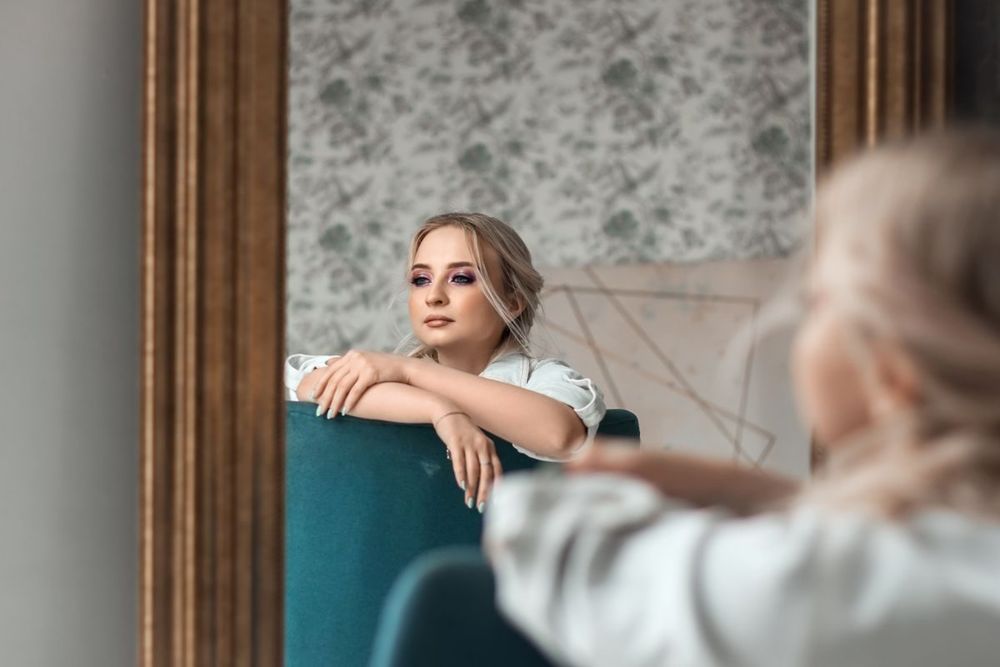
A mirror shows you what is already there, sometimes with a detail you had overlooked. It shows you today. That is the spirit of the approach: the cards are a surface onto which you project your situation, and the images on them, which are old, rich and ambiguous, help you see it from a fresh angle, one that is far easier to find with an image in front of you.
Why would random cards help? Because meaning comes from the meeting between an image and a question; the draw simply supplies the image. When you look at L’Hermite (the Hermit) while thinking about a stalled relationship, your mind does the work of connecting them: who has withdrawn, what is being searched for, what the lantern might light up. The card provides a prompt that is rich enough to hold many readings and specific enough to push you in a direction. That is also why the same card can say something different to two people, or to you on two different days.
This approach is as faithful to tarot as any other. Tarot started as a card game in fifteenth-century Italy; its use for fortune-telling developed later, from the late eighteenth century. Using it for reflection is simply one more way of working with the same images, and arguably the one that respects you most as the person making your own choices.
What tarot can do
Slow you down
Doing a reading invites you to stop: to formulate a question, shuffle, look. That pause has value in itself, in days that move too fast. Many questions become clearer simply because you had to write them down. Our guide on how to ask a good tarot question shows how much work the question alone can do.
Give images to what is blurry
A vague worry is hard to think about. A card, with its figure, gestures and colours, offers an image to hold on to. “I feel like Le Pendu (the Hanged Man): suspended, waiting, seeing things upside down” is often more telling than “I feel lost”. Once a feeling has an image, you can look at it, talk about it, and ask what would change it.
Bring in another point of view
The cards speak frankly. An unexpected card invites you to consider a hypothesis you had set aside. What if I am the one blocking things? What if the real issue is the way I approach this job? This is often the moment a reading becomes genuinely useful: when it voices something you had yet to admit to yourself.
Make a decision easier to see
In a spread like Path of Decision, each option and its consequence are laid out side by side. The choice stays yours, and tarot makes it more legible. Seeing “what I gain” and “what I give up” in two concrete images is often enough to realise which way you were already leaning, or why you were hesitating.
Where tarot stops
- Certainty about the future. Every card describes a tendency, and what will “definitely” happen stays open. Be wary of any reading that locks you into a fate, whether good or bad.
- Other people’s minds. Tarot sheds light on how you experience a relationship. What goes on inside someone else is theirs to tell you; for “What does he think of me?”, the reliable source is the person himself.
- Professional advice. For health, law, money or mental health, a reading can accompany your thinking but never replace a doctor, lawyer, financial adviser or psychologist.
- Your decisions. If you notice that you feel the need to draw cards before every step, take a break. A tool for reflection works best when it stays occasional and you stay in charge.
If you are going through a difficult time, talk to someone. In the United States, call or text 988; in the UK and Ireland, Samaritans answer on 116 123. In an emergency, call 112 in Europe or 911 in North America.
Free will and the ethics of reading
The mirror approach rests on one principle: you remain the author of your choices. Everything else follows from it.
It means we present every card as a description that leaves room for your response. Arcanum XIII, the card that bears only its number, and La Maison Dieu (the Tower) are the cards people fear most, yet they describe transformation, upheaval, an end that makes room for something new. How you live that transformation depends largely on you.
It means a “future” position is read as a tendency: where things might go if they continue on their current course. That is useful precisely because you can change something.
It means we keep readings centred on you and respect other people’s private lives, and we decline readings designed to manipulate, monitor or judge someone else. A good question stays on your side of the relationship.
And it means being honest about limits. A reading that promises a reunion, a fortune or a cure is a sales pitch. If anyone offers you a reading that ends with a promise or with fear, and especially if it ends with a request for more money to “lift” a curse, walk away.
Finally, it means paying attention to how often you read. A reading now and then, on a question that matters, can be a real help. Drawing cards several times a day on the same worry usually feeds the worry. If you notice that pattern, it is a sign to step away from the deck for a while and talk to someone. A mirror serves you best when you glance into it now and then, and then turn back to your life.
Three examples of a mirror reading
These are illustrations of the approach, invented for the purpose.
A relationship that has gone quiet. You ask: “What do I need to understand about the distance between my partner and me?” and draw L’Hermite (the Hermit). An oracle-style reading might say “your partner is withdrawing”. A mirror reading asks: who is carrying the lantern here? Perhaps you have both retreated into your own concerns. Perhaps you are the one who has stopped reaching out. The card leaves the answer to you; it points to where to look.
A job you are questioning. You ask: “What keeps me in this job, and what pulls me elsewhere?” and draw L’Empereur (the Emperor) then Le Mat (the Fool). The first card speaks of structure, security and authority; the second of setting out, freedom and the unknown. The reading leaves the decision with you. It shows you the two forces at play, stability and adventure, and invites you to ask how much of each you need right now.
A period of low mood. You ask: “What is this difficult period asking me to look at?” and draw La Lune (the Moon). The card shows a night landscape, two dogs howling, a crayfish emerging from water: confusion, fears, things still taking shape. A mirror reading might suggest that this is a time for patience and gentleness, with big decisions kept for later. And if the low mood lasts or deepens, the most important step is to talk to someone: a friend, a doctor, a helpline.
A family tension. You ask: “How can I approach the next family gathering more calmly?” after years of the same arguments with a sibling. You draw La Tempérance (Temperance): a winged figure pouring liquid between two vessels. A mirror reading has plenty to offer here. It invites you to think about pace and dosage: arriving later, leaving earlier, choosing which subjects to engage with and which to let pass. Your sibling stays who they are; the card helps you choose how you will be in the room.
Where artificial intelligence fits in
On Tarot Universel, the written interpretation of your spread is produced by artificial intelligence. We say so openly, because transparency is part of trust.
In practice:
- You ask the question and choose your cards.
- The AI connects each card to its position and to your question, following the Marseille tradition and the instructions we have given it: keep the future open, stay kind, respect your free will.
- We write and adjust those instructions, and the reference texts on the site, such as the card guides.
The AI knows only what you write. It is a tool for putting things into words, a fluent and patient one, and the reflection and the decision remain yours. Read its interpretation the way you would read a thoughtful friend’s suggestions: take what resonates, question the rest.
To get the most out of a reading in this spirit, a few habits help:
- Ask an open question centred on you.
- Read each card in its place in the spread, beyond its general definition. Our guide to the three-card spread shows how positions work.
- Notice what touches you, what irritates you and what surprises you. Your reactions are doing the work.
- Write a sentence or two about what you take from the reading, in your own words.
- Come back to it a few days later. A reading reread with some distance often says something new.
Used like this, tarot is less about knowing what will happen and more about understanding what is happening, so that you can respond to it as yourself. If you would like to try it, do a first reading on a question that matters to you.
Frequently asked questions
Can tarot predict the future?
In our approach, a reading describes a situation and its tendencies as they appear today; what happens next stays open. You remain free to choose, and that freedom is precisely what makes a reading worth doing. A card in a 'future' position shows where the current dynamic might lead if things continue as they are: a direction you can still change.
Can I use tarot for a health question?
Tarot can help you put words to what you feel about a health situation, such as fear, fatigue or the need for support. It never replaces medical advice. For a symptom, a diagnosis or a treatment, see a doctor or another qualified health professional. Use any reading as a way of preparing your questions for them; the answers come from them.
What should I do if I am going through a very hard time?
Talk to someone you trust or to a professional. In the United States you can call or text 988; in the UK and Ireland, Samaritans answer on 116 123, day and night. In an emergency, call your local emergency number (112 across Europe, 911 in North America). A tarot reading is not the right tool for a crisis.
If tarot does not predict anything, why use it at all?
Because it is a remarkably good tool for thinking. It slows you down, gives images to feelings that are hard to name, puts in front of you a perspective you might have overlooked, and makes choices easier to see clearly. Many people find this more useful than any prediction.
Why use artificial intelligence to interpret tarot?
To let anyone get a detailed reading of their spread at any time. On Tarot Universel, the AI is instructed to follow the Marseille tradition and an introspective approach: an open future, respect for your free will. It remains a tool for putting things into words; the reflection and the decision are yours.
Want to try it on your own question?
The app interprets your own Tarot de Marseille spread, card by card, based on the question you ask.
Get a free reading1st reading free · then tokens from €4.99, pay as you go